
Secondary nav 2022

  • Equipment
  • Software
  • Training

Main navigation 2022

  • About
    • About HR Wallingford
    • Our leadership
    • Our people
    • Our impact
      • Annual report & financial statements
      • Gender pay
      • Social impact
      • Sustainability
    • Our story
    • News
    • Insight articles
    • Policies
  • Projects
  • Expertise
    • Coastal & marine sustainability
      • Coastal hazards & resilience
      • Coastal morphology & sediment dynamics
      • Dredging and sediment management
      • Marine & coastal environment
      • Ports, harbours and shipping
      • Subsea engineering
      • Waterfronts, marinas and resorts
    • Energy transition
      • Fixed offshore wind
      • Floating offshore wind
      • Liquified gas & transition fuels
      • Nuclear
      • Wave, tidal, solar & hydropower
    • Water & climate resilience
      • Dams & reservoirs
      • Freshwater environment
      • Integrated flood management
      • Surface water systems
      • Water management for climate resilient development
      • Water supply & drought resilience
  • Facilities
    • Explore our facilities
    • Ship simulation
      • Australia Ship Simulation Centre
      • UK Ship Simulation Centre
    • Physical modelling
      • Fast Flow Facility
      • Tsunami simulator
      • Volumetric flow flume
      • Wave basins
      • Wave flumes
      • Erosion rate measurement
      • Water rescue training
  • Careers
    • Careers overview
    • Working at HR Wallingford
    • Job opportunities
  • Contact
  • About
    • About HR Wallingford
    • Our leadership
    • Our people
    • Our impact
      • Annual report & financial statements
      • Gender pay
      • Social impact
      • Sustainability
    • Our story
    • News
    • Insight articles
    • Policies
  • Projects
  • Expertise
    • Coastal & marine sustainability
      • Coastal hazards & resilience
      • Coastal morphology & sediment dynamics
      • Dredging and sediment management
      • Marine & coastal environment
      • Ports, harbours and shipping
      • Subsea engineering
      • Waterfronts, marinas and resorts
    • Energy transition
      • Fixed offshore wind
      • Floating offshore wind
      • Liquified gas & transition fuels
      • Nuclear
      • Wave, tidal, solar & hydropower
    • Water & climate resilience
      • Dams & reservoirs
      • Freshwater environment
      • Integrated flood management
      • Surface water systems
      • Water management for climate resilient development
      • Water supply & drought resilience
  • Facilities
    • Explore our facilities
    • Ship simulation
      • Australia Ship Simulation Centre
      • UK Ship Simulation Centre
    • Physical modelling
      • Fast Flow Facility
      • Tsunami simulator
      • Volumetric flow flume
      • Wave basins
      • Wave flumes
      • Erosion rate measurement
      • Water rescue training
  • Careers
    • Careers overview
    • Working at HR Wallingford
    • Job opportunities
  • Contact
  1. Home >
  2. Training >
  3. Breach modelling: why, when and how?
Breach modelling: why, when and how?

Share

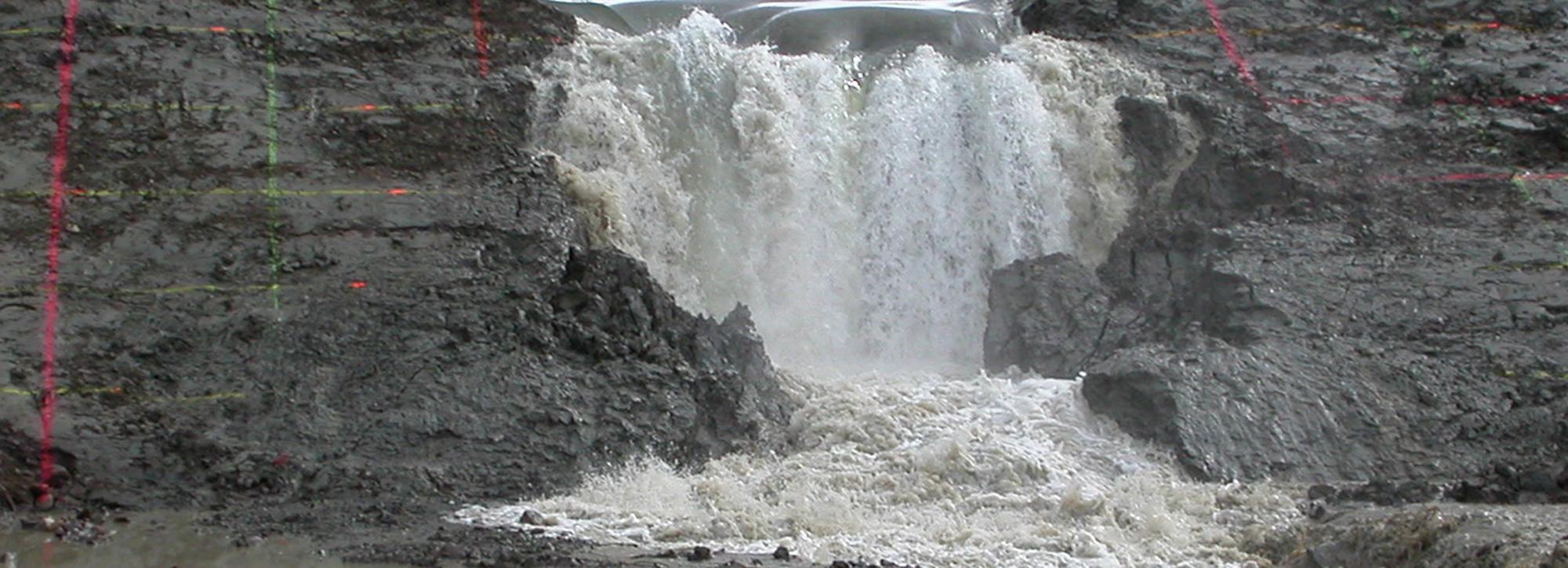
This webinar introduces a physically based breach model, the EMBREA model. We will describe the various features of the model showing the significance of looking at the embankment design detail, the associated variations in failure processes and how this can significantly affect the consequences.

Duration
45 minutes
Type
Webinar
Fee
£0.00 excl VAT ?
Select variants
Dates Options Type Price
21 January - 21 September 2026 EMBREA-2026-1
Breach modelling course
Online
£0.00 + VAT
More about tax

Earthen dams and flood embankments are critical infrastructure that play a vital role for many purposes. However, their failure by breaching carries severe consequences to the people and the assets they serve. It is therefore important to understand the potential failure processes and impacts that can be associated with such failures, which can be done by accurately modelling of the breach processes. 

This webinar introduces a physically based breach model, the EMBREA model. We will describe the various features of the model showing the significance of looking at the embankment design detail, the associated variations in failure processes and how this can significantly affect the consequences. The online versions of EMBREA , Lite and Pro, will also be introduced with an example showing how the model can be used to simulate a failure through an embankment dam. The webinar concludes by outlining the current and planned research in this area.

You can join the webinar at any time during the time it is open for registration. You will be given access to your dedicated training space on our website where you will have access to the webinar. 

We invite you to visit our dedicated website on breach modelling www.dambreach.org for more information.

FAQs

More information about travel and accommodation, booking and confirmation and more.

Read more

Course login

Access joining instructions, course materials and course certificates inyour secure course area.

Login

Get in touch

Sarah Moxon

Events & Publications Coordinator
Contact

We are global leaders and independent experts in how to live and work sustainably with water

Social media

  • BlueSky
  • LinkedIn
  • YouTube

Expertise

  • Coastal & marine
  • Energy transition
  • Water & climate
  • Software solutions
  • Equipment & technology

Company

  • About
  • Careers
  • News
  • Insights
  • Sustainability

Legal

  • Privacy & data protection
  • Policies
  • Modern slavery statement
  • Terms & conditions
  • Sitemap
© 2026 HR Wallingford